
The start of a new financial year brings with it one of the most talked-about topics in UK employment – the annual rise in the National Living Wage and National Minimum Wage. From April 2026, millions of workers across the country will see a meaningful increase in their pay packets, while employers, particularly small and medium-sized businesses, will need to plan carefully to absorb the additional costs. At Personnel Placements, we work closely with both job seekers and hiring businesses every day, so we wanted to break down exactly what these changes mean for both sides of the employment relationship.
What Are the New Wage Rates?
The headline change is the National Living Wage rising by 4.1% to £12.71 per hour for eligible workers aged 21 and over. According to the Government, this increase will boost the gross annual earnings of a full-time worker on this rate by approximately £900, benefiting around 2.4 million low-paid workers across the UK.
To put that into practical terms: a worker on a 40-hour week will now earn £26,436.80 per year before tax. Those on a 37.5-hour week will take home £24,784.50 annually, while a 35-hour week equates to £23,132.20.
For younger workers, the changes are even more significant. The National Minimum Wage for 18 to 20-year-olds rises by 8.5% to £10.85 per hour, an annual earnings boost of around £1,500 for a full-time worker. This substantial increase reflects the Government’s stated ambition to narrow the gap between youth and adult wage rates, with a longer-term goal of phasing out the 18–20 age band entirely and establishing a single adult rate.
For 16 to 17-year-olds and apprentices, the rate increases by 6% to £8 per hour, recognising the importance of supporting younger people entering the workforce for the first time.
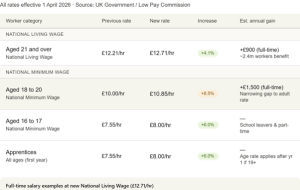
In total, the Government estimates these increases will benefit around 2.7 million workers across the UK.
What Does This Mean for Workers?
For employees on the lowest wages, this is genuinely positive news. The cost of living has remained the dominant financial concern for millions of households across the UK, and while no wage rise can solve every challenge, an extra £900 to £1,500 a year can make a real difference to people’s lives.
For younger workers in particular, the 8.5% increase is a statement of intent. It signals that their contribution to the workforce is being taken more seriously, and that the longstanding disparity between what a 19-year-old earns compared to a 25-year-old doing the same job is gradually being addressed. This is especially meaningful for those stepping into their first roles in retail, hospitality, care, and other sectors that rely heavily on young talent.
What Does This Mean for Employers?
For business owners and hiring managers, the picture is more complex. The wage increases come at a time when many employers are already navigating rising costs; National Insurance contributions, energy prices, supply chain pressures, and a broader economic environment that has made running a business genuinely difficult.
The increase for 18 to 20-year-olds is particularly notable for sectors that employ large numbers of younger staff, such as retail, catering, hospitality, and customer service. Combined with the adult rate rise, businesses that employ a mix of age groups will need to review their entire payroll structure to ensure compliance and manage budgets effectively.
There is a risk, as industry voices have noted, that if employment becomes too costly, some businesses may reduce headcount, limit hours, or pause recruitment entirely. Others may look to automation or restructuring to offset wage costs.
However, it’s also worth considering the other side of the argument. Higher wages can reduce staff turnover, one of the most expensive problems a business can face. When employees feel fairly compensated, they are more likely to stay, perform better, and contribute positively to company culture. Recruitment and retraining costs are significant, and retaining good people has a genuine financial value that is often underestimated.
For small businesses especially, the key is planning ahead. Review your payroll now. Model the impact of the new rates on your monthly and annual costs. Consider whether your pricing reflects the true cost of delivery. And think about your recruitment strategy – are you attracting the right people at the right cost for your business?
How Personnel Placements Can Help
At Personnel Placements, we understand that wage changes create both challenges and opportunities. Whether you’re a worker wanting to make sure you’re being paid fairly and looking for a role that values your contribution, or an employer trying to build a strong, motivated team within a realistic budget, we’re here to help.
We specialise in connecting the right candidates with the right businesses across a range of sectors. Our consultants understand the local employment market, keep up to date with legislative changes, and can offer practical, straightforward advice on your recruitment needs.
If you’re an employer looking to review your staffing structure in light of the new wage rates, or a job seeker ready to take the next step in your career, we’d love to hear from you.